
The Best Fluffy Pancakes recipe you will fall in love with. Full of tips and tricks to help you make the best pancakes.

When planning a kitchen renovation, most homeowners focus on cabinets, countertops, appliances, and backsplashes. However, kitchen flooring is equally important because it serves as the foundation of the entire space. The floor influences the overall appearance, comfort, functionality, and durability of your kitchen. A carefully selected flooring material can enhance your interior design, withstand daily wear and tear, and even increase the value of your home.
The kitchen is one of the busiest areas in any house. Family members walk through it multiple times a day, meals are prepared there, and spills are almost inevitable. Because of these demands, kitchen flooring must be both attractive and practical. It should be durable enough to handle heavy foot traffic, resistant to moisture and stains, and easy to clean and maintain. Fortunately, modern flooring options offer a wide variety of styles, textures, and materials that can meet the needs of every homeowner.
Whether you are designing a modern kitchen, a rustic farmhouse-inspired space, or a luxurious contemporary cooking area, the right flooring can dramatically transform the look and feel of the room. In this guide, we will explore some of the best kitchen flooring ideas that combine beauty, durability, and long-term value.
Why Kitchen Flooring Plays a Crucial Role in Kitchen Design
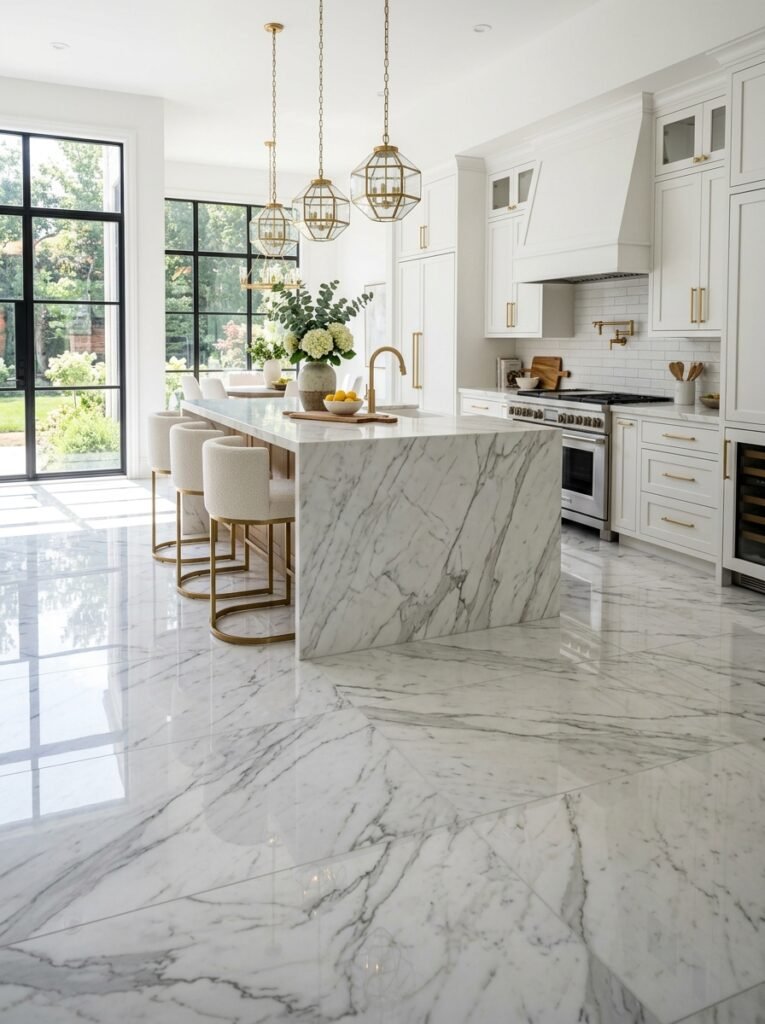
Kitchen flooring does much more than provide a surface to walk on. It acts as a visual anchor that ties together all other design elements within the room. The color, texture, and material of the floor influence how large or small a kitchen appears and can significantly affect the overall atmosphere.
Light-colored flooring can make a compact kitchen feel more spacious and open, while darker flooring creates a sense of elegance and sophistication. Textured materials can add character and warmth, whereas smooth finishes often contribute to a sleek, contemporary appearance. Beyond aesthetics, flooring affects comfort, safety, and maintenance requirements.
A high-quality floor can withstand years of daily use without showing significant wear. It can resist scratches from moving chairs, survive accidental spills, and remain attractive despite constant foot traffic. For these reasons, choosing the right flooring material is one of the most important decisions in any kitchen renovation project.
Factors to Consider Before Choosing Kitchen Flooring
Before selecting a flooring material, homeowners should evaluate several important factors. Kitchens experience unique conditions compared to other rooms in the house, making it essential to choose a floor that can handle these challenges.
Durability should always be a top priority. Since kitchens receive heavy use, the flooring material should resist scratches, dents, stains, and general wear. Moisture resistance is equally important because water spills, steam, and humidity are common in cooking spaces. Maintenance requirements should also be considered, as some flooring materials require regular sealing or refinishing while others need only simple cleaning.
Budget is another significant factor. Flooring options range from affordable vinyl and laminate products to premium natural stone and hardwood materials. Finally, the flooring should complement the overall design style of the kitchen to create a cohesive and visually appealing space.
Hardwood Flooring: A Timeless Choice for Elegant Kitchens
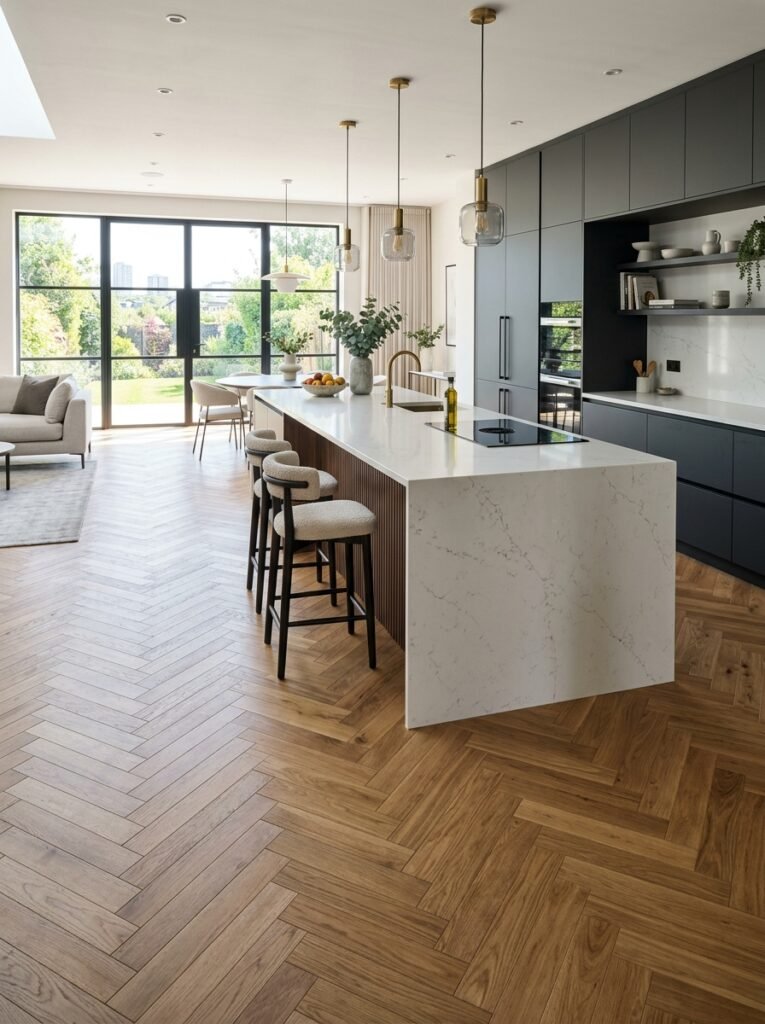
Hardwood flooring has been a favorite among homeowners for generations. Its natural beauty, rich texture, and timeless appeal make it one of the most desirable flooring options available. Hardwood floors add warmth and sophistication to a kitchen while creating a seamless transition into adjoining living spaces.
One of the greatest advantages of hardwood flooring is its versatility. It works equally well in traditional, farmhouse, rustic, transitional, and modern kitchen designs. Available in a wide range of wood species, colors, and finishes, hardwood can be customized to match virtually any interior style.
Popular choices include oak, maple, walnut, hickory, and cherry. Each species offers unique grain patterns and color variations that contribute to the floor’s character and charm. Hardwood flooring also ages gracefully, often becoming more attractive over time as it develops a natural patina.
Benefits of Hardwood Flooring in Kitchens
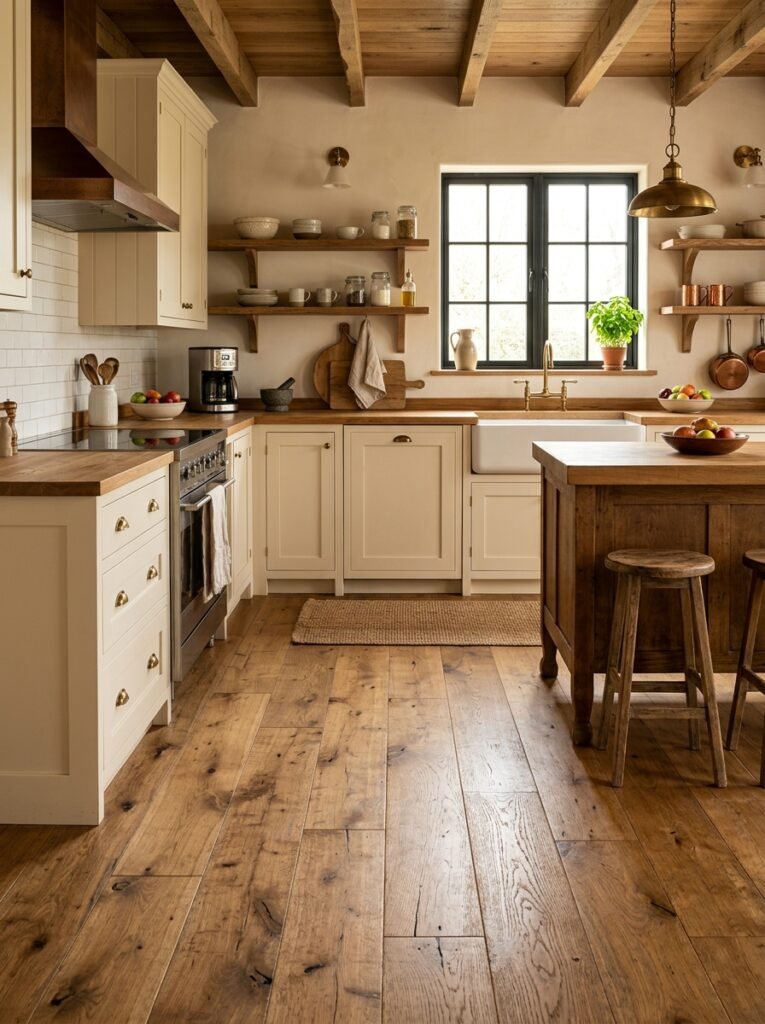
Hardwood flooring offers several benefits that contribute to its popularity. It provides a warm and welcoming appearance that many synthetic materials struggle to replicate. Unlike trends that quickly go out of style, hardwood remains a timeless design element that continues to appeal to homeowners and buyers alike.
Another major advantage is longevity. With proper care and maintenance, hardwood floors can last for decades. Even if scratches or surface wear develop over time, hardwood can often be sanded and refinished to restore its original appearance. This makes it a long-term investment that can add significant value to a home.
Additionally, hardwood flooring helps create a cohesive design throughout the house. Many homeowners choose to extend hardwood floors from living areas into the kitchen, creating a continuous and visually pleasing flow.
Considerations Before Installing Hardwood Flooring
Although hardwood flooring offers numerous advantages, homeowners should also be aware of its limitations. Wood is naturally susceptible to moisture, which means standing water can cause warping, swelling, or staining if not cleaned promptly.
To minimize these risks, homeowners should select high-quality finishes that provide added protection against moisture and wear. Regular maintenance, including sweeping and occasional refinishing, is also necessary to preserve the floor’s beauty over time.
Despite these considerations, hardwood remains one of the most sought-after flooring options for kitchens due to its unmatched elegance and lasting value.
Luxury Vinyl Plank Flooring: The Perfect Blend of Style and Functionality
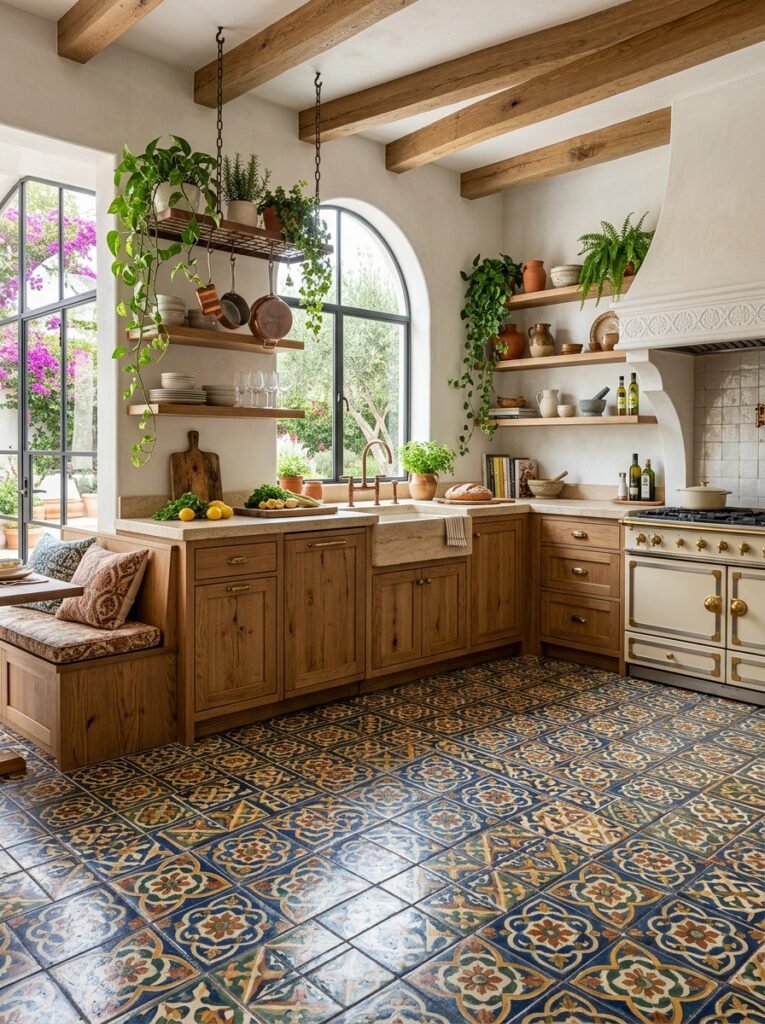
Luxury Vinyl Plank flooring, often referred to as LVP, has become one of the most popular kitchen flooring options in recent years. Advances in manufacturing technology have enabled vinyl flooring to closely mimic the appearance of natural hardwood while offering superior durability and moisture resistance.
Luxury vinyl flooring consists of multiple layers designed to provide stability, comfort, and protection against everyday wear. The top layer features realistic wood patterns and textures, making it difficult for many people to distinguish vinyl from genuine hardwood.
Because of its practical benefits and attractive appearance, LVP has become a preferred choice for homeowners seeking a stylish yet low-maintenance flooring solution.
Why Luxury Vinyl Flooring Is Ideal for Kitchens
One of the primary reasons luxury vinyl flooring is so popular in kitchens is its exceptional water resistance. Unlike hardwood, vinyl can handle spills, splashes, and humidity without suffering damage. This makes it particularly well-suited for busy households with children, pets, or frequent cooking activities.
Luxury vinyl flooring is also highly resistant to scratches, dents, and stains. Its durable wear layer helps protect the surface from everyday damage, allowing it to maintain its appearance for years. Additionally, vinyl flooring is softer underfoot than tile, providing greater comfort during long cooking sessions.
Installation is another advantage. Many luxury vinyl products feature click-lock systems that simplify installation and reduce labor costs. This makes vinyl an attractive option for homeowners looking for a cost-effective kitchen upgrade.
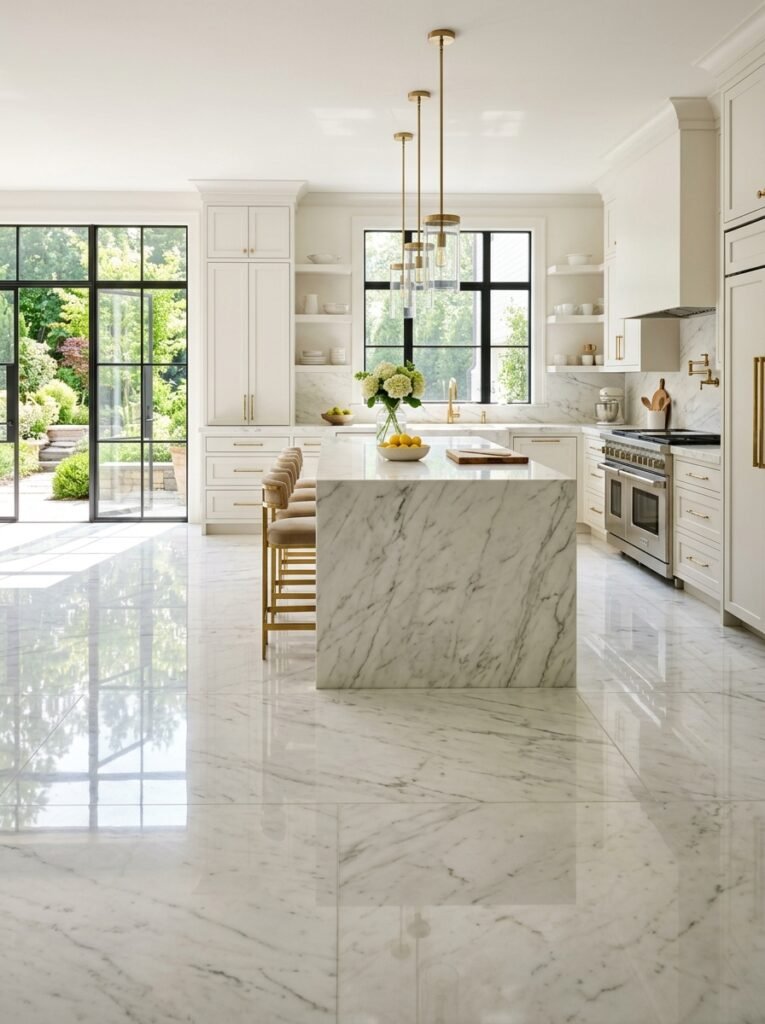
Design Options Available in Luxury Vinyl Flooring
Modern luxury vinyl flooring is available in an impressive variety of styles and finishes. Homeowners can choose from designs that replicate oak, walnut, maple, hickory, and many other wood species. Some products even mimic the appearance of stone or ceramic tile.
The wide range of colors and textures available allows homeowners to achieve virtually any design aesthetic. Whether creating a rustic farmhouse kitchen, a sleek contemporary space, or a traditional family kitchen, there is likely a luxury vinyl option that complements the desired style.
Furthermore, luxury vinyl flooring often costs significantly less than natural hardwood while providing many of the same visual benefits. This combination of affordability, durability, and beauty has made it one of the fastest-growing flooring categories in the home improvement industry.