
The Best Fluffy Pancakes recipe you will fall in love with. Full of tips and tricks to help you make the best pancakes.

The kitchen is no longer just a utilitarian space for preparing meals—it is the focal point of modern architecture and interior design. Over the past decade, kitchen design has transitioned from sterile, all-white minimalist layouts to rich, tactile environments that blend tranquil aesthetics with everyday durability. At the very heart of this evolution is Japandi kitchen flooring, a trend that has rapidly become the quintessential foundation for high-end, luxury homes.
By merging the clean, functional lines of Scandinavian design (hygge) with the organic, serene philosophy of Japanese wabi-sabi, Japandi style elevates kitchen spaces without feeling overly fussy or clinical. The secret to achieving this high-end look lies right underfoot. Your flooring establishes the tone, texture, and visual flow of the entire room.
Whether you are remodeling an expansive open-concept home or refreshing an urban apartment cook space, this comprehensive guide explores how to select, style, and care for Japandi kitchen flooring to achieve an effortlessly luxurious look.
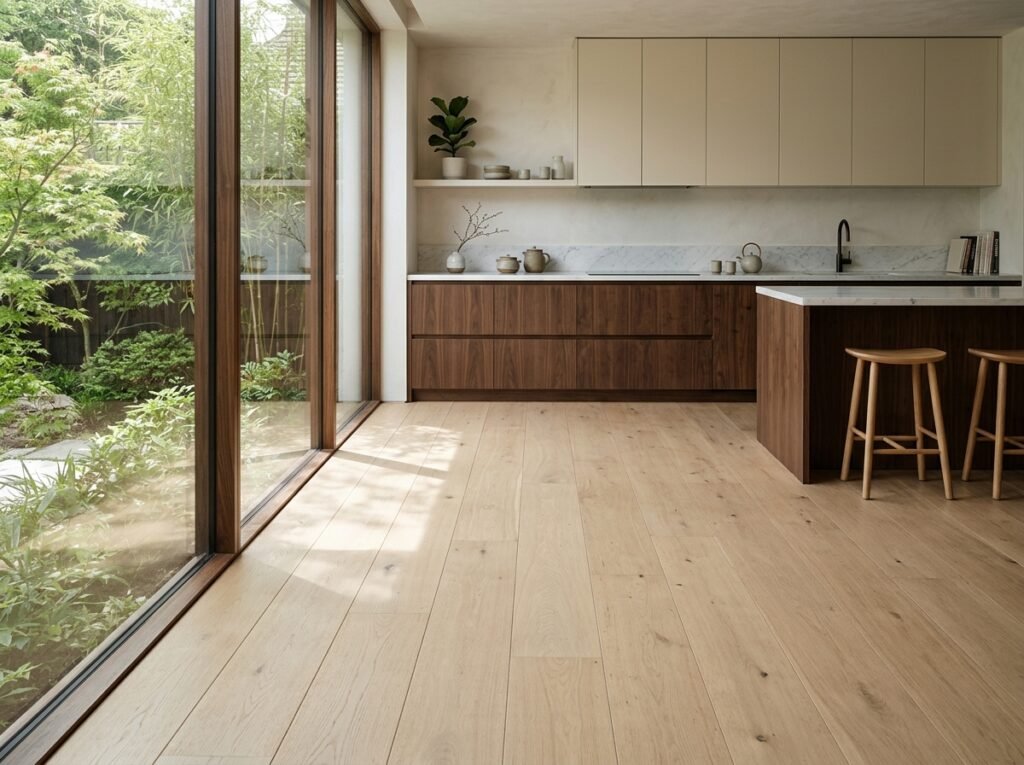
What Makes Japandi Kitchen Flooring Unique?
To understand why Japandi kitchen flooring has gained massive popularity among top interior architects, one must look at its core principles: balance, warmth, and texture. Traditional minimalism often relied on stark white glossy floors and high-shine chrome that felt cold. Japandi, on the other hand, embraces natural materials, matte finishes, and subtle earth tones.
Key Characteristics of Japandi Floors:
- Matte & Honed Surfaces: High-gloss floors reflect harsh light and highlight every footprint. Japandi floors prioritize low-sheen, matte textures that absorb light softly.
- Light to Medium Neutral Tones: Blonde oak, sand, warm greige, soft taupe, and muted stone form the ideal palette.
- Organic Grain & Subtle Veining: The flooring should showcase natural wood grain or soft mineral variations rather than aggressive, high-contrast patterns.
- Seamless Visual Continuity: Minimizing grout lines or plank seams allows the eyes to rest, creating a sense of expansive luxury.
The Top 4 Japandi Kitchen Flooring Materials
Choosing the right material requires balancing luxury visual appeal with the practical demands of a cooking environment—such as water resistance, foot traffic, and spill protection. Below are the top four flooring materials that define modern Japandi luxury kitchens.
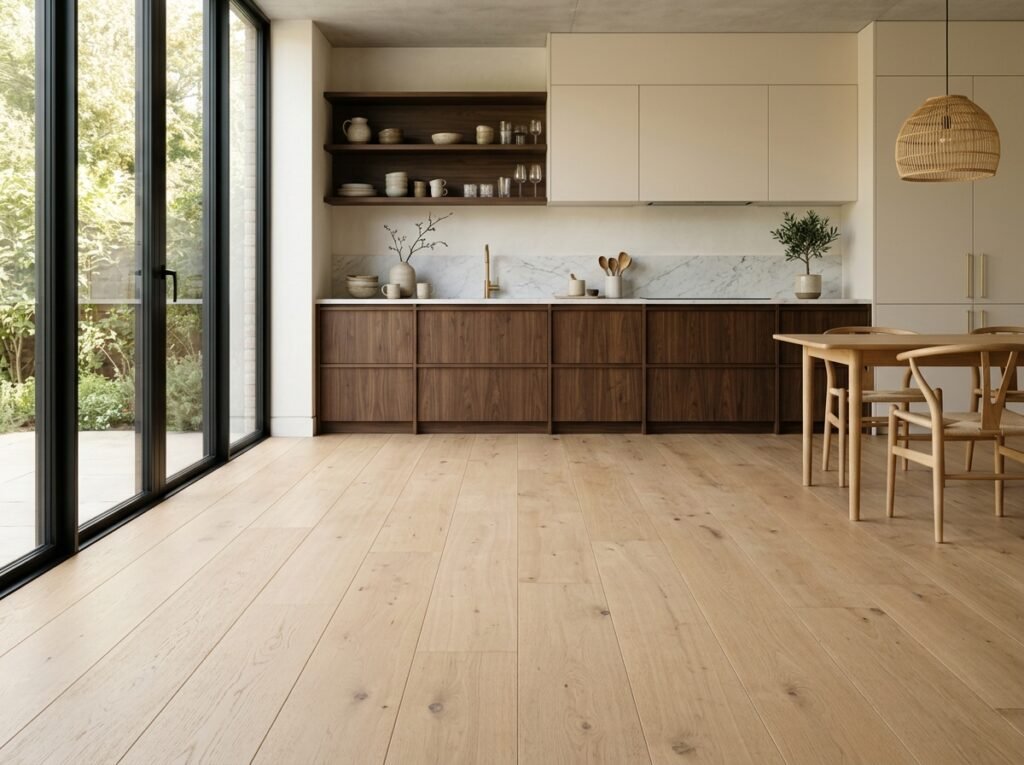
1. Light Oak & Ash Hardwood (or Engineered Wood)
Nothing beats the natural warmth and underfoot comfort of authentic timber. Light-toned woods like European white oak, ash, and Scandinavian pine are cornerstones of Japandi design.
- Why It Works: Wire-brushed or matte polyurethane finishes let the natural wood grain shine while providing a smooth, velvety texture.
- Best Application: Engineered hardwood with a thick wear layer works exceptionally well in kitchens because its multi-ply core resists warping from heat and humidity fluctuations.
- Pro Tip: Opt for wide planks (7 to 10 inches wide). Wider planks dramatically reduce vertical seam lines, instantly making smaller kitchens look larger and more cohesive.
2. Large-Format Porcelain & Stone-Look Tiles
If durability and zero-stress maintenance are your top priorities, large-format porcelain tile is the undisputed champion of modern kitchen design.
- Why It Works: Porcelain tiles that replicate warm limestone, soft concrete, or tactile travertines provide a serene, grounded feel.
- The Luxury Factor: Using extra-large tiles (such as 24×48 inches or 36×36 inches) means significantly fewer grout lines. Match your grout color precisely to the tile shade to create a near-monolithic slab appearance.
- Performance: Porcelain is completely non-porous, waterproof, stain-resistant, and ideal for pairing with underfloor radiant heating systems.
3. Luxury Vinyl Plank (LVP) & Rigid Core Vinyl
For busy households with pets, children, or heavy cooking activity, high-end Luxury Vinyl Plank (LVP) has become a designer-approved alternative to real wood.
- Why It Works: Advanced 3D embossing technology replicates natural wood grain and stone textures so accurately that it is virtually indistinguishable from real wood once installed.
- Japandi Specifics: Look for LVP collections featuring soft sand, pale wheat, or blonde oak tones with a low-gloss, ultra-matte protective wear layer.
- Performance: 100% waterproof construction ensures peace of mind against dishwashers, ice maker leaks, and pet spills.
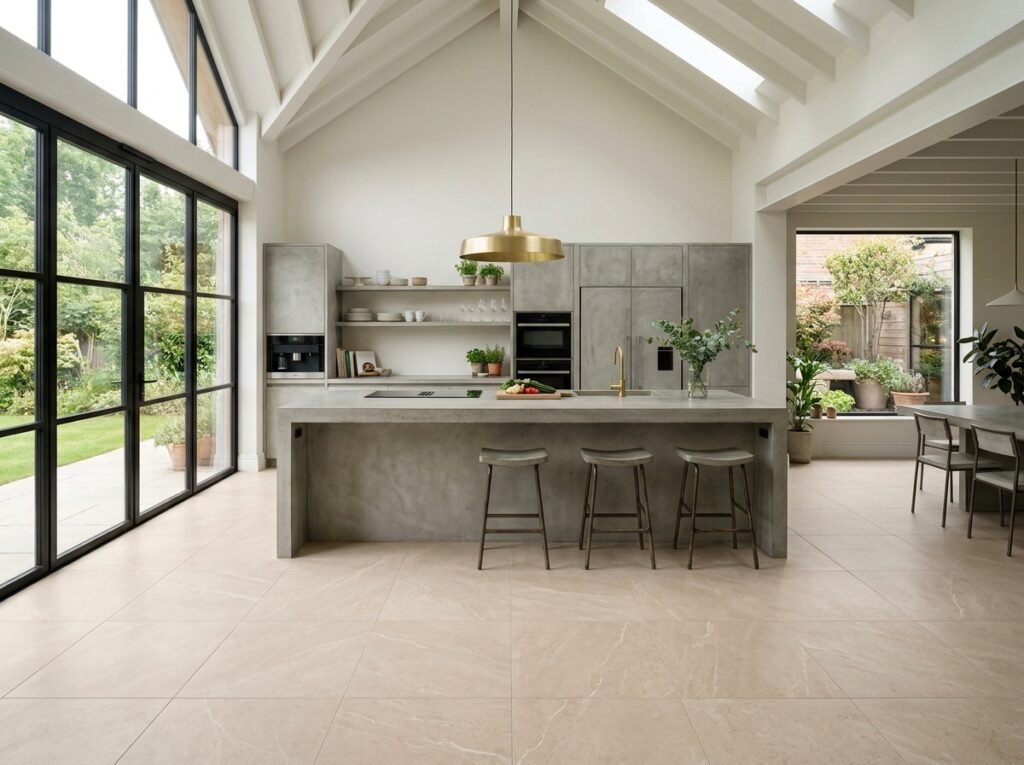
4. Micro-Terrazzo & Soft Concrete
Inspired by industrial Scandinavian architecture and traditional Japanese craftsmanship, micro-terrazzo and smooth concrete-look floors offer a slightly edgy, architectural luxury.
- Why It Works: Unlike coarse 1970s terrazzo, micro-terrazzo features fine, soft mineral flecks embedded in warm beige or soft gray bases.
- Styling Pairing: These floors pair beautifully with minimalist flat-panel cabinetry made of warm walnut, natural oak, or matte black hardware.
Japandi Flooring Comparison Matrix
To help you make the best decision for your home, here is how the primary Japandi kitchen flooring options stack up against each other:
| Feature | Engineered Hardwood | Large-Format Porcelain Tile | Luxury Vinyl Plank (LVP) | Micro-Terrazzo / Concrete |
| Aesthetic Vibe | Warm, timeless, tactile luxury | Sleek, architectural, spa-like calm | Casual warmth, modern functionality | Artistic, contemporary, grounded |
| Water Resistance | Moderate (Requires prompt cleanup) | 100% Waterproof | 100% Waterproof | High to 100% (When sealed) |
| Maintenance Need | Medium (Requires re-oiling/care) | Extremely Low | Extremely Low | Low to Medium |
| Underfoot Comfort | Warm and naturally resilient | Firm and cool (Best with radiant heat) | Soft and quiet underfoot | Firm and solid |
| Relative Cost | High ($$$$) \vert{} Medium to High ($$$) | Budget to Medium ($$) \vert{} High ($$$$) |
Layout Strategies: How Layout Patterns Transform the Vibe
How you lay your flooring planks or tiles is just as important as the material itself. The layout determines the rhythm, scale, and flow of light in your kitchen.
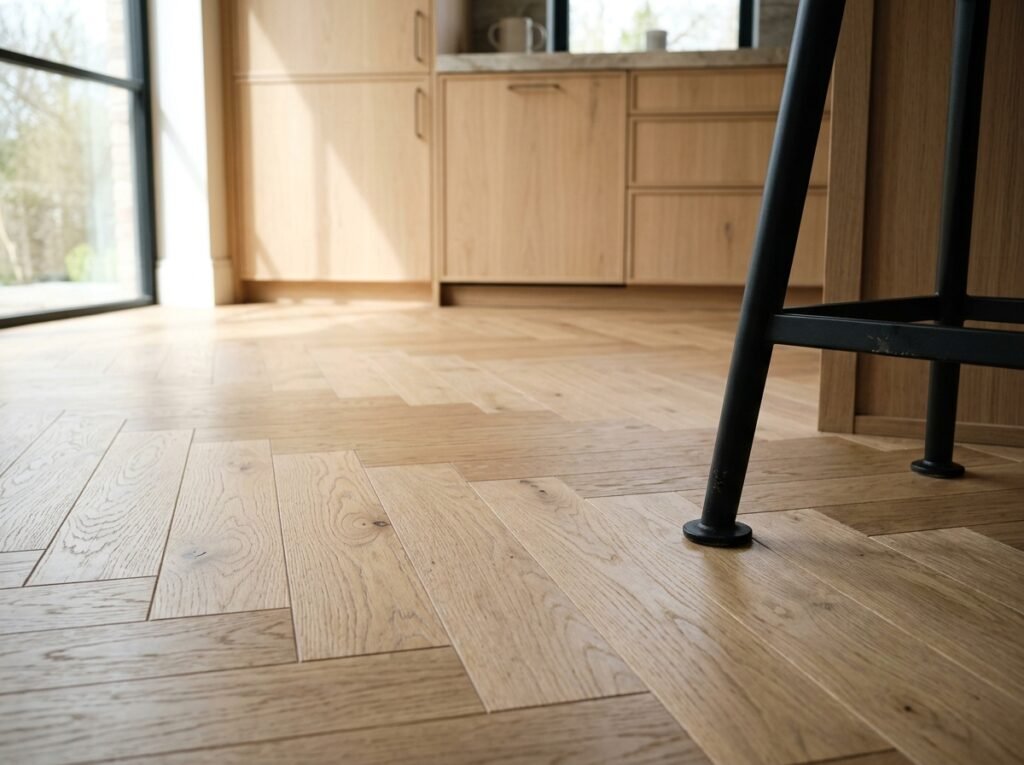
1. Light Oak Herringbone
Herringbone is a timeless European pattern that has experienced a massive modern revival. In a Japandi kitchen, using a subtle, light-toned wood plank in a herringbone arrangement adds geometric artistry without cluttering the room.
- Key Rule: Keep the wood grain soft and tone variations minimal so the pattern reads as a delicate background texture rather than a loud statement.
2. Parallel Wide Planks (Perpendicular to Windows)
Running wide planks straight along the visual line of incoming daylight lengthens the room and creates an airy, continuous flow. It directs the eye forward toward kitchen islands or outdoor garden views.
3. Grid-Aligned Large Tiles
When using large porcelain or stone-look tiles, stack them in a clean grid rather than a staggered brick layout. Staggered brick layouts evoke traditional masonry, whereas grid alignments align perfectly with Japanese architectural precision.
Styling Your Japandi Kitchen Floor with Cabinets & Countertops
A great floor should never exist in isolation—it must interact harmoniously with your kitchen cabinets, island, and countertops.
1. High-Contrast Harmony (Light Floors + Dark Wood Cabinets)
Pairing light-toned Japandi wood or beige stone flooring with dark walnut or charcoal stained cabinetry creates a grounded, sophisticated look. The light floor prevents dark cabinetry from feeling heavy, while the dark wood adds Japanese-inspired drama.
2. Tone-on-Tone Serenity (Monochromatic Warmth)
For the ultimate calm, select flooring that matches your lower cabinetry within two shades. Pair blonde oak floors with pale oak cabinets, white quartz countertops, and matte brass or bronze hardware. Introduce contrast through organic elements like stoneware ceramics, linen window shades, and potted greenery.
3. Handleless Cabinetry Integration
To honor the clean Japandi philosophy, opt for J-pull or push-to-open handleless cabinets. When handleless cabinets rest above a seamless porcelain or wide-plank floor, the entire kitchen feels custom-built, calm, and uncluttered.
Long-Term Maintenance: Keeping Your Floors Pristine
Japandi design celebrates natural aging and craftsmanship (wabi-sabi), but proper routine care ensures your high-end kitchen flooring remains beautiful for decades.
- Use pH-Neutral Cleaners: Avoid harsh bleach, ammonia, or abrasive scrubbing powders. Clean wood, tile, and vinyl floors using a damp microfiber mop and a dedicated pH-neutral cleaner.
- Protect Against Moisture Accumulation: Although LVP and porcelain are waterproof, hardwood floors require quick attention to major liquids. Wipe up spills around the sink and refrigerator immediately.
- Felt Pads Under Stools: High-traffic kitchen islands mean frequent movement of counter stools. Attach heavy-duty felt pads to the legs of all seating to prevent scratches on wood or vinyl floors.
- Mind the Sun Exposure: Direct sunlight through large kitchen windows can bleach or warm natural wood tones over time. Use sheer blinds or UV-filtering glass windows to keep wood tones consistent.
Frequently Asked Questions (FAQs)
Is real hardwood practical for kitchen flooring?
Yes, engineered hardwood is practical for kitchens when treated with a high-quality matte protective sealer. Engineered wood is more dimensionally stable than solid wood under temperature and moisture changes. However, if you have frequent heavy spills, 100% waterproof LVP or porcelain tile offers easier maintenance.
Which Japandi floor color makes a small kitchen look bigger?
Light blonde wood, soft sand, and warm light-greige stone tiles reflect light effectively, making small kitchens feel open and airy. Choosing large-format tiles or extra-wide planks further reduces visual clutter, enhancing the sense of space.
How do I warm up stone or tile kitchen floors?
To prevent tile or concrete floors from feeling cold underfoot, install an electric underfloor radiant heating system underneath. Additionally, styling the space with woven washable runner rugs made from natural jute or cotton adds cozy Scandinavian texture.
Summary: Designing Your Dream Kitchen Foundation
Japandi kitchen flooring represents the ideal balance between functional daily living and high-end aesthetic design. By focusing on natural light-toned wood, extra-large porcelain tiles, matte finishes, and clean layout patterns, you build a tranquil foundation that transforms your kitchen into a serene luxury sanctuary.
Focus on quality materials, keep grout lines minimal, and embrace warmth—your dream Japandi kitchen begins from the ground up.